Recover safely at home, sooner
Modern joint replacement pathways mean that many suitable patients can return home on the same day as surgery, or after a short overnight stay.
Mr Tom Symes was the lead surgeon in the design and delivery of the day-case joint replacement pathways at Spire Hull & East Riding Hospital, Castle Hill Hospital and Goole Hospital.
He also performed the first day-case joint replacement patients in the new day-case unit at Castle Hill Hospital.
4 joint replacements. 1 day. All home the same day.
More recently, four patients underwent joint replacement surgery in a single day and all four were safely discharged home on the day of surgery — demonstrating what can be achieved with careful patient selection, preparation and a well-designed enhanced-recovery pathway.
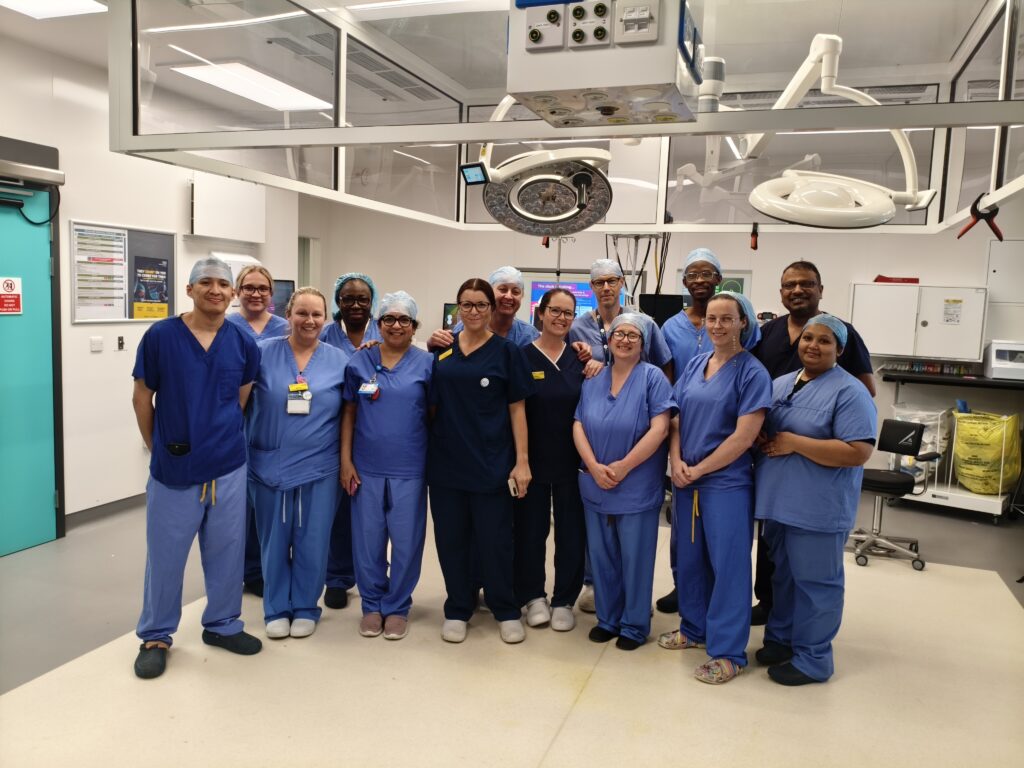
Carefully planned. Enhanced recovery. Individualised to you.
- Home the same day where appropriate
- Modern pain and anti-sickness protocols
- Pathways designed and led by Mr Symes
- Extensive experience in day-case joint replacement
What Is Day-Case Joint Replacement?
Day-case joint replacement means having your hip or knee replacement and returning home later the same day, once you are comfortable, medically well and able to mobilise safely.
For some patients, an overnight stay may be more appropriate. The aim is not to discharge patients as quickly as possible, but to allow you to recover at home when it is safe and suitable to do so.
Day-case or short-stay pathways can be used for:
- Total hip replacement
- Total knee replacement
- Partial knee replacement
- SPAIRE hip replacement
- Robotic hip and knee replacements
Why Recover at Home?
Many patients prefer recovering in their own surroundings rather than remaining in hospital.
Potential advantages include:
- Sleeping in your own bed
- Returning to a normal routine sooner
- Earlier mobilisation and independence
- Less time spent in hospital
- Less disruption for you and your family
- Reduced exposure to the hospital environment
Successful day-case surgery depends on much more than simply performing the operation. It requires careful preparation before surgery, modern anaesthetic and pain-relief techniques, early mobilisation and a structured recovery pathway.
What Happens Before Surgery?
Preparation begins well before the day of your operation.
You will be assessed to make sure that day-case or short-stay surgery is appropriate for you. This includes considering your general health, mobility, home circumstances and the support available after surgery.
You will also receive clear information about:
- What to expect on the day of surgery
- Pain relief
- Walking after your operation
- Physiotherapy exercises
- Using crutches or walking aids
- Wound care
- Medication
- When to seek advice
Knowing what to expect and preparing in advance can make the whole experience smoother and less daunting.
What Happens on the Day?
Whenever possible, surgery is planned early in the day to allow plenty of time for mobilisation and recovery afterwards.
Before surgery
You will usually receive pre-medication as part of the enhanced-recovery pathway. The aim is to prevent or minimise pain, nausea and other symptoms rather than waiting for them to develop after your operation.
During surgery
A number of measures are used to make the early recovery period as comfortable as possible. These may include:
- Local anaesthetic infiltration around the tissues at the time of surgery to provide early pain relief
- Steroids to help reduce inflammation, pain and nausea
- Anti-sickness medication during the operation to reduce nausea and vomiting when you wake up
- A carefully planned anaesthetic designed to minimise unnecessary sedation and allow you to recover quickly
As soon as you wake up
Once you are awake and able to drink safely, you will normally be offered an energy drink to help replace fluids and calories and support early recovery. You will also be encouraged to start eating and drinking as soon as possible.
Controlling pain and nausea
Pain after surgery is managed using multimodal pain relief. This means using several different types of painkillers that work in different ways. The aim is to provide good pain control while reducing reliance on stronger opioid medication where possible.
You will normally also receive:
- Regular anti-sickness medication to help prevent nausea rather than simply treating it once it develops
- Laxatives, where appropriate, to help prevent constipation associated with surgery, reduced activity and some painkillers
Getting moving
Early mobilisation is an important part of the pathway. A physiotherapist will help you get out of bed, walk and practise any necessary steps or stairs.
Before going home, the team will make sure that:
- Your pain is adequately controlled
- You are not troubled by significant nausea or dizziness
- You can eat and drink
- You can pass urine normally
- You can walk safely
- You understand your medication and exercises
- You have appropriate support at home
These measures are designed to reduce some of the common barriers to getting home after joint replacement — particularly pain, nausea, dizziness and delayed mobilisation.
Will I Be Forced to Go Home the Same Day?
No
Day-case surgery is a goal not a deadline
If you are not ready to go home, you will stay in hospital until it is safe for you to leave.
Some patients will be better suited to an overnight stay because of their health, home circumstances or the complexity of their surgery.
The pathway is always tailored to you.
Who Is Suitable?
Many patients undergoing routine hip or knee replacement can potentially follow a day-case or short-stay pathway. Age alone does not necessarily determine whether someone is suitable.
The decision takes into account factors such as:
- Your overall health
- The type of surgery required
- Your mobility before surgery
- Your home environment
- Support available after discharge
Mr Symes will discuss whether day-case surgery is suitable for you as part of your consultation
What Happens After I Get Home?
You will be encouraged to continue walking regularly and perform the exercises recommended by your physiotherapist.
Pain relief is usually taken regularly during the first few days and then reduced as your symptoms improve.
Most patients gradually increase their activity over the following days and weeks.
Going home on the day of surgery does not mean that you are expected to recover faster than everyone else. It simply means that, when it is safe to do so, the early part of your recovery can take place in your own home rather than in hospital.
Leading the Development of Day-Case Joint Replacement
Mr Symes was the lead surgeon in the design and delivery of day-case joint replacement pathways at:
- Spire Hull & East Riding Hospital
- Castle Hill Hospital
- Goole Hospital
He performed the first day-case joint replacement patients in the new day-case unit at Castle Hill Hospital and has continued to help develop and refine the pathway.
4 joint replacements. 1 day. All home the same day.
More recently, four patients underwent joint replacement surgery during a single day and all four were safely discharged home that day.
This experience has helped refine every stage of the pathway — from preparation and anaesthesia through to pain control, prevention of nausea, early mobilisation and discharge.
The aim is not simply to reduce hospital stay. It is to create a pathway that makes recovery safe, predictable and as comfortable as possible, allowing patients to return home sooner when that is right for them.
Considering Hip or Knee Replacement?
If you are considering hip replacement, knee replacement or partial knee replacement in Hull and East Yorkshire, you can discuss whether a day-case or 23-hour joint replacement pathway may be suitable for you during your consultation with Mr Symes.