Personalised joint replacement with advanced robotic technology
From October 2026, Mr Tom Symes will offer MAKO robotic-assisted joint replacement surgery for:
- Total hip replacement
- SPAIRE total hip replacement
- Total knee replacement
- Partial knee replacement
MAKO is one of the world’s most established robotic-assisted joint replacement systems. It combines a detailed 3D CT-based plan with robotic technology that helps the surgeon carry out that plan accurately during the operation.
The robot does not perform the operation independently.
Mr Symes remains in control of the surgery throughout.
What is MAKO robotic joint replacement?
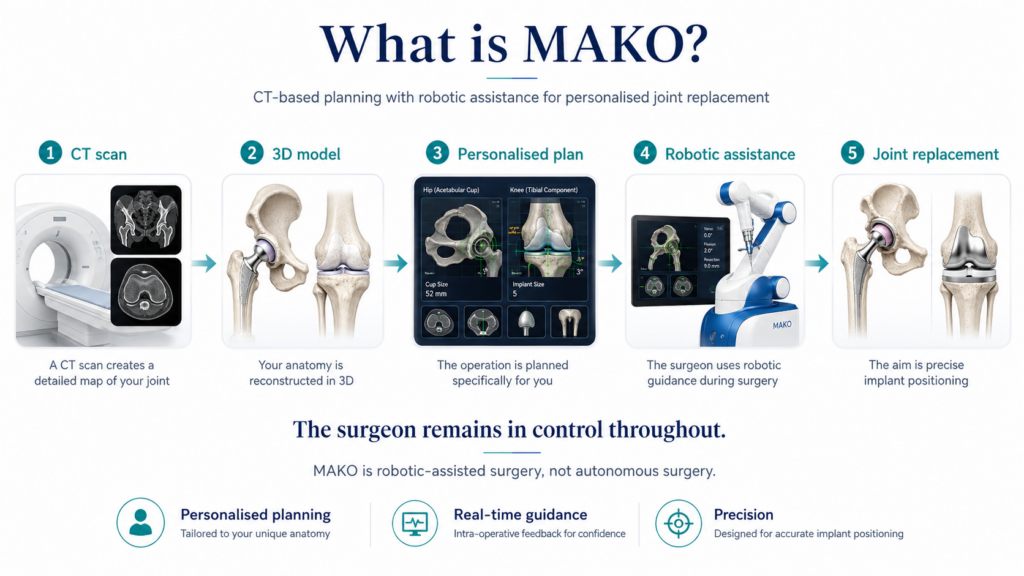
Before surgery, you have a CT scan of your hip or knee.
MAKO uses this scan to create a detailed 3D model of your individual anatomy. The operation can then be planned specifically for you, including the size and intended position of the joint replacement components.
During surgery, Mr Symes uses the MAKO robotic arm to help reproduce this personalised surgical plan.
The system provides real-time information and haptic guidance, helping control preparation of the bone within predetermined boundaries.
In simple terms:
CT scan → 3D personalised plan → robotic-assisted surgery → accurate execution of the plan
MAKO Total Hip Replacement
Hip replacement requires accurate restoration of the position and mechanics of the hip.
Using a CT scan, MAKO allows the hip replacement to be planned in three dimensions before surgery.
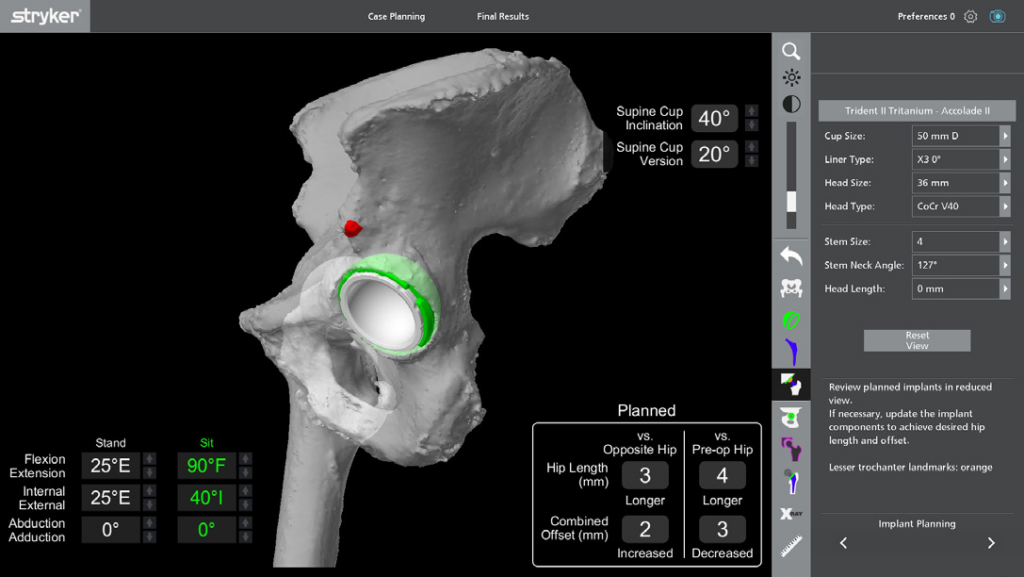
This includes planning factors such as:
- Implant size and position
- Position of the hip socket
- Centre of rotation of the hip
- Leg length
- Hip offset
- The relationship between the pelvis and hip components
The robotic system then assists Mr Symes during preparation and implantation of the socket to reproduce the planned position.
Research comparing MAKO robotic-assisted and conventional total hip replacement has demonstrated improved accuracy of component positioning, although the extent to which this translates into better long-term patient outcomes continues to be studied.
MAKO + SPAIRE Hip Replacement
Mr Symes will also combine MAKO robotic technology with the SPAIRE muscle-preserving approach to hip replacement.
These two techniques address different parts of the operation.
SPAIRE focuses on preserving important muscles and tendons around the hip.
MAKO focuses on detailed 3D planning and accurate implant positioning.
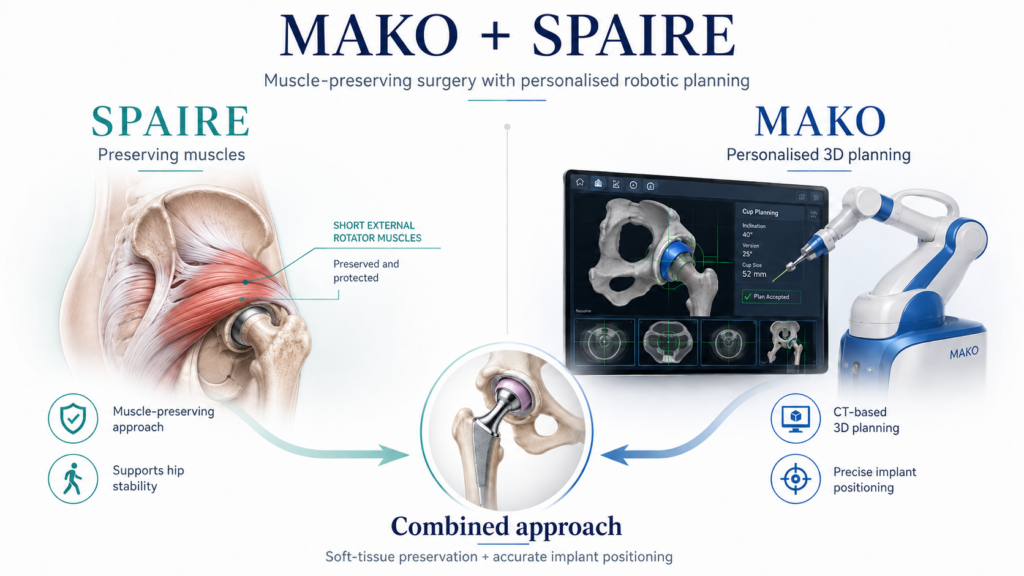
Combining them allows Mr Symes to use a muscle-preserving surgical approach alongside advanced robotic planning and guidance.
For suitable patients this provides an attractive combination:
Preserve the soft tissues.
Plan the hip individually.
Position the components precisely.
MAKO Total Knee Replacement
No two knees are exactly the same.
Traditional knee replacement uses mechanical instruments to determine the position of the implants. MAKO provides considerably more information during the operation.
Before surgery, your CT scan creates a three-dimensional model of your knee.
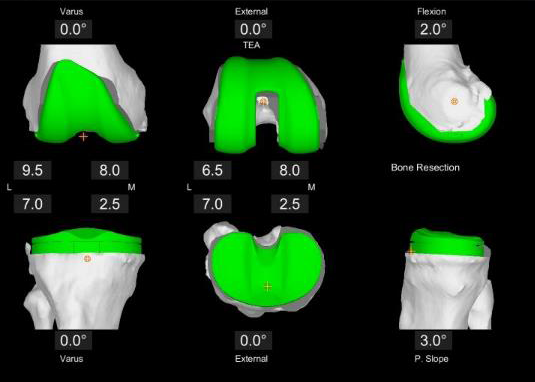
Mr Symes can then plan the replacement around both your anatomy and the way your knee behaves.
During surgery, the system can provide information about:
- The position of the knee
- Implant size and position
- Alignment
- Ligament tension
- Knee balance through the range of movement
he position of the components can be adjusted virtually before the bone is prepared.
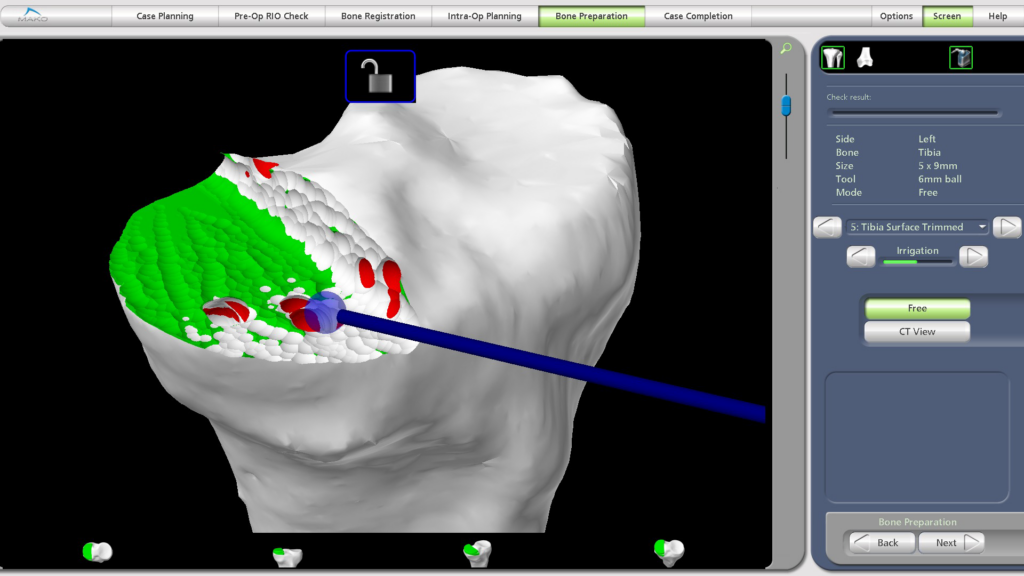
The robotic arm then assists Mr Symes in performing the planned bone preparation.
Studies consistently show that robotic knee replacement can improve the accuracy with which the surgical plan and alignment are achieved. Evidence that this produces substantially better outcomes for every patient is still developing, although recent MAKO-specific research has reported encouraging functional results.
MAKO Partial Knee Replacement
Partial knee replacement can be particularly suited to robotic technology because successful surgery depends on accurately resurfacing the damaged part of the knee while preserving the healthy parts of the joint.
MAKO allows Mr Symes to create a detailed 3D plan before surgery and assess ligament tension and knee movement during the operation.
The robotic arm then helps keep bone preparation within the planned area.
The aim is to:
- Replace only the damaged compartment
- Preserve healthy bone
- Preserve the unaffected parts of the knee
- Accurately position the partial knee replacement
- Maintain good ligament balance
Evidence comparing robotic and conventional partial knee replacement has reported improved functional outcomes in some studies and lower complication and revision rates, although research continues to evolve.
What are the potential advantages of MAKO?
The most important advantage is not simply that a robot is being used.
It is the additional information and control it gives the surgeon.
MAKO allows:
Personalised 3D planning
Your operation is planned using a CT-based model of your own anatomy rather than relying only on standard measurements and X-rays.
Precise implant positioning
The technology helps the surgeon reproduce the planned implant position accurately.
Real-time information
During knee replacement, alignment, movement and ligament balance can be assessed before the final bone preparation is performed.
Controlled bone preparation
The robotic arm uses haptic boundaries to help constrain preparation to the area defined by the surgical plan.
Individualised surgery
The objective is not simply to perform the same operation more accurately, but to use the additional information available to tailor the replacement to the individual patient.
Does the robot perform the operation?
No. This is an important distinction.
MAKO is a robotic-assisted system rather than an autonomous robot.
The surgeon:
- Plans the operation
- Decides where the implants should be positioned
- Controls the robotic arm
- Performs the operation
- Makes all surgical decisions
The technology provides additional planning information, measurements and physical guidance.
The surgeon remains in control throughout the procedure.
What happens before MAKO surgery?
If robotic-assisted joint replacement is appropriate for you, a CT scan of your hip or knee is arranged before surgery.
The scan is used to construct the three-dimensional model used to plan your operation.
You will otherwise undergo the same detailed assessment and preparation for joint replacement surgery, including optimisation of your health before surgery where required.
MAKO surgery can also be incorporated into Mr Symes’ enhanced recovery and day-case joint replacement pathways for suitable patients.
Is robotic surgery better than conventional joint replacement?
Robotic technology offers clear advantages in planning and surgical accuracy.
Research has demonstrated improved accuracy of implant positioning and reduction in some alignment outliers compared with conventional techniques.
However, robotic surgery should not be viewed as a guarantee of a better result.
Successful joint replacement still depends on many factors, including:
- Selecting the correct operation
- Surgical experience and technique
- Implant choice
- Soft-tissue management
- Anaesthetic and pain-management pathways
- Rehabilitation
- The patient’s general health and expectations
For this reason, Mr Symes uses robotic technology as one part of a carefully planned joint replacement pathway, rather than as a replacement for surgical judgement.
Considering hip or knee replacement?
If you would like to discuss whether conventional or MAKO robotic-assisted joint replacement may be suitable for you, you can arrange a consultation with Mr Tom Symes.
MAKO robotic-assisted hip and knee replacement available from October 2026.